Structural Integration
subheader here
A Path to Self-Discovery
Alignment and effortless movement have always been at the heart of my journey.
When I discovered Structural Integration, I found something beyond physical alignment. It gave me a deeper sense of connection to myself, to others, and to the way I experience the world. It helped me better understand who I am and how I move through life.
This discovery inspired me to take a new path, one that I am now excited to share with others.
Through Structural Bodywork, I hope to guide each person toward greater freedom of movement, a more balanced relationship with their body, and a deeper sense of connection to themselves.
Because no two bodies are alike, I believe the journey is not about striving for an ideal alignment, but rather about discovering the alignment and movement that feel natural and true to you.
I look forward to accompanying you on your own journey.
Sophie
-
Find balance. Release tension. Move with ease.
Structural Integration is a hands-on approach to bodywork and movement education designed to improve posture, release tension, and help your body move with greater ease.
It focuses on the fascia, a continuous network of connective tissue that surrounds and supports your muscles, bones, and other structures throughout your body.
Over time, our daily habits, physical activities, injuries, and repetitive movements can influence how we hold ourselves and move. Some areas may become tense or restricted, while others compensate.
Through hands-on techniques and movement awareness, Structural Integration explores these patterns and helps your body discover new possibilities for balance, coordination, and freedom of movement.
Rather than working on one isolated area, we look at how the entire body works together.
The goal is not to create perfect posture, but to help you discover an alignment that feels natural, comfortable, and true to your body.
Structural Integration is a progressive process, traditionally offered as a series of 12 sessions in the Anatomy Trains approach. Each session builds upon the previous one, allowing the body time to adapt and integrate new possibilities for movement and balance.
-
Changes aren’t always dramatic. Sometimes, they are found in the simplest everyday movements.
You may begin to notice:
● Standing with less effort and feeling more supported by your feet.
● Walking with greater ease and fluidity.
● Feeling less tension in your neck, shoulders, back, or hips.
● Experiencing more freedom in your breathing.
● Discovering greater flexibility and mobility.
● Becoming more aware of how you sit, stand, and move.
Feeling more connected to your body.
Every body is different, and so is every experience.
Structural Integration is not about forcing your body into a new shape. It is about exploring how different parts of your body relate to one another and discovering more comfortable and efficient ways of moving.
-
A session is about 75 minutes.
We discuss your movement habits, physical history, areas of tension, and what you would like to explore or improve.
We observe your posture and movement.
You may be invited to stand, walk, or perform simple movements to better understand how your body organizes itself.
We explore through hands-on bodywork.
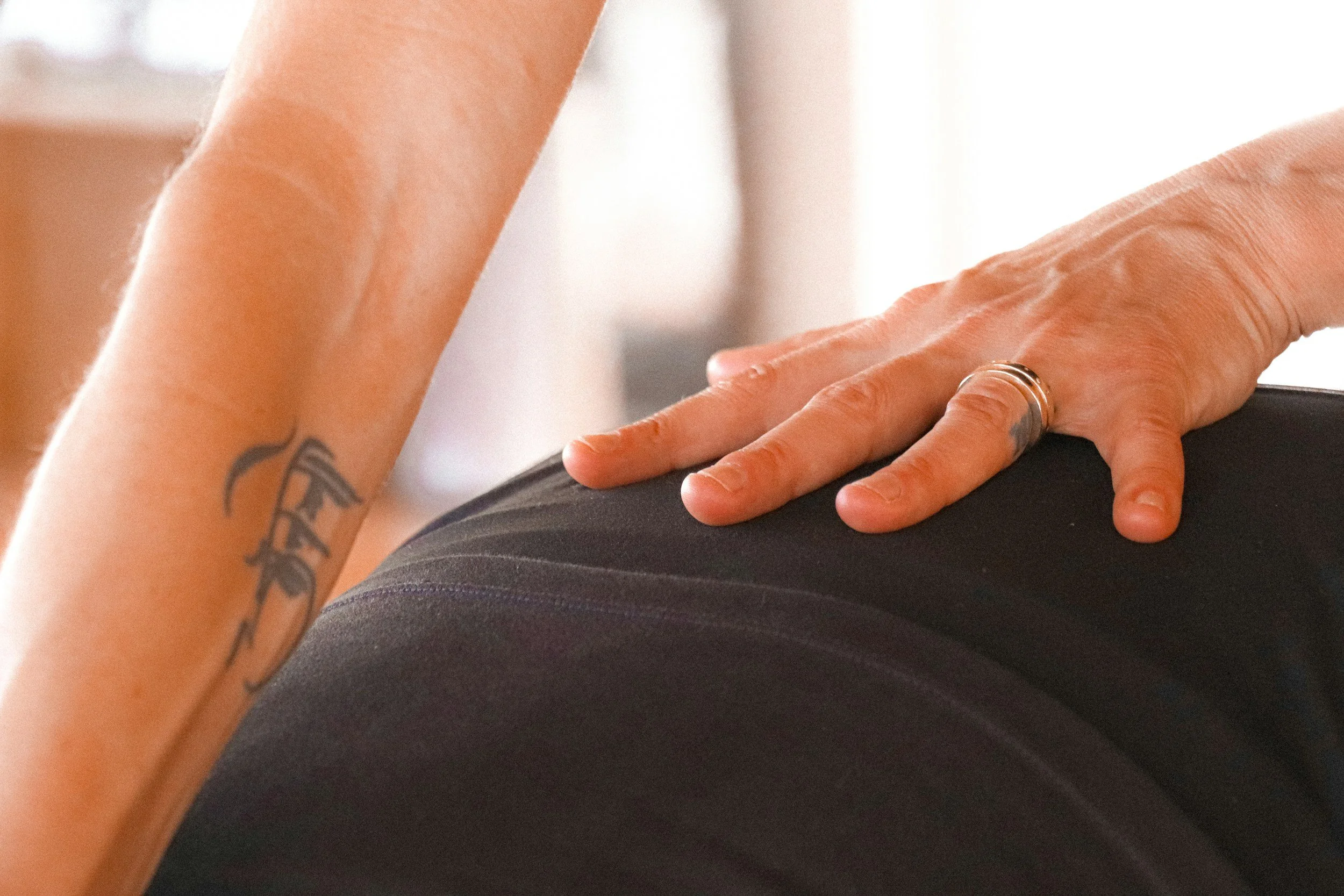
Using slow, intentional touch and varying levels of pressure, we work with your fascia and surrounding tissues. At times, you may be guided through small movements as we work as a team
Unlike a traditional relaxation massage, Structural Integration is an active process. Your awareness, feedback, and participation are important parts of the experience.
We take time to notice changes.
Throughout the session, we may revisit standing, walking, or other movements to explore what feels different.
The intention is not only to experience change on the table, but also to discover how that change might translate into your everyday life.
-
Structural Integration is for anyone interested in understanding their body better and exploring greater ease in movement.
It may be particularly interesting for:
● People experiencing ongoing tension or stiffness, especially in the neck, shoulders, back, or hips.
● People who spend long hours sitting or standing, and want to explore their posture and movement habits.
● Dancers, athletes, and active individuals looking to refine their movement efficiency, coordination, and body awareness.
● People experiencing limitations in flexibility or mobility, who want to explore how different areas of their body work together.
● Anyone curious about their body, seeking greater comfort, balance, and connection through movement.
You don’t need to be in pain or have a particular physical goal to benefit from exploring Structural Integration.
Sometimes, curiosity is enough.
Page should cover:
how to get started » call to action (book an initial section)
your unique approach to Structural Integration
include your story
include how you approach SI with clients
curiosity — thirst for knowledge about the ways humans move + function
dance background — how to bring this into a professional career
What is structural integration (get a little nerdy)
why should someone want to book/use SI
root cause
What is Structural Integration?
description here
xyz
What to expect from Structural Integration sessions
-
We deliver end-to-end services that minimize fragmentation.
-
The three-session series offers an introduction to Structural Integration through a shorter, whole-body approach.
Each session explores a different area of the body, beginning with the lower body, moving to the upper body, and finishing with the spine, bringing everything together.
While the traditional Anatomy Trains approach consists of 12 sessions, this shorter series allows you to experience the work and begin discovering new possibilities for movement and balance.
Following a complete series, occasional sessions can also provide ongoing support, helping you revisit areas of tension, explore new movement patterns, and adapt to changes in your body over time.
-
Every proposal is anchored in empirical evidence.